In a country with a remarkable and tedious lack of action-oriented drive, it is hard to understand (or perhaps all too easy) the proliferation of Observatories, without their promoters seeking, with the same degree of intellectual interest, to also foster the emergence of “Operatories,” “Actionatories,” or other entities more tuned to the forces of dynamics than to the softness of stasis.
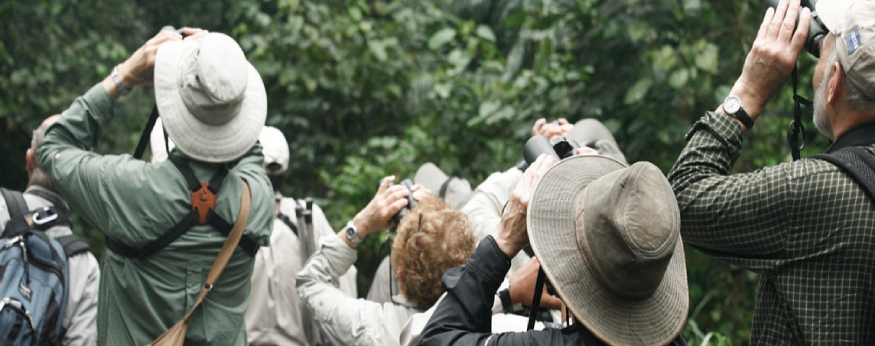
The tendency to create and maintain so many observation jobs, besides raising a strong suspicion of an ornithological bent, raises a fundamental ethical question: is it legitimate for half the country to spend its time and our resources observing and cataloging the other half of the homeland?
The observer, settled in the almost liturgical comfort of note-taking, converts reality into an inventory of phenomena, where the urgency of the world is replaced by the elegance of taxonomy.
And so, while life acts, the Observatory describes; while the problem presses, the Observatory delimits; while the opportunity passes, the Observatory publishes a report with great layout and poor consequence.
Observers have time in abundance, for nothing moves them that can or should be scheduled with a deadline. Description is a task attached to the passing days, one that is not devalued by insane repetition, since repetition itself is a fact to be described.
And, lacking the drive for change, the entire value of their action is transferred to a pursuit of precision that, while potentially brilliant, will never move a single straw. The country is growing accustomed to this form of risk-free virtue: nailing the diagnosis down to microscopic detail while failing, with statistical serenity, the actual intervention.
Herein lies the paradox: the more one observes, the less one lives. Watching and gazing long-term becomes an occupation and a way of life. But the curious activity of the Observatories blanketing the country is generating a culture of “pretending to do,” a sort of administrative theater where gestures are simulated—the same gesture, always the same—and the simulation is applauded as if it were actual work.
The problem is not that Observatories exist; the problem is that the country is becoming, in itself, an observatory of itself: a mirror placed in front of another mirror, multiplying reflections and diminishing substance.
And while observation becomes professionalized, Doing becomes deprofessionalized. The hand that could learn to build learns to comment; the intelligence that could solve learns to characterize; the energy that could dare learns to measure.
The labor shortage, so often cited with an air of fatality, may perhaps be merely the social symptom of a pedagogy of contemplation: taught only to see and describe, fewer and fewer people choose action as a reason for living, thereby losing the profound experience of Doing, which lies at the foundation of human evolution.
Let us reclaim the Homo Faber. Not out of contempt for thought, but out of respect for it: thinking that does not lead to an active gesture is dilettantism; thinking that risks no consequence is mere ornament. The country does not need less intelligence; it needs more applied courage.
We need “Operatories” that cut, “Actionatories” that push, “Fabricatories” that build, and even “Erratories” that make mistakes quickly—because error, at least, possesses a virtue unknown to reports: it leaves a mark on the world.
Paulo Fidalgo
CEO of Marketividade