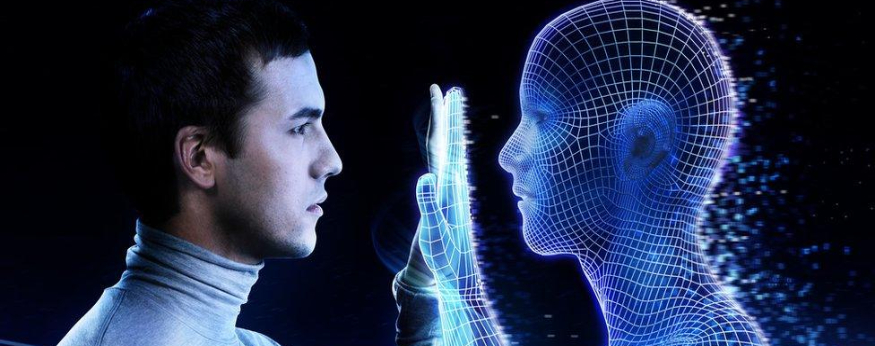

Artificial intelligence is going through a paradoxical moment in its evolution. While AI systems become progressively more sophisticated and ubiquitous in contemporary cultural production, a fundamental question arises that threatens the very sustainability of this development: if AI learns exclusively from human cultural production, what happens when that production is increasingly dominated by artificially generated content?
The comparison with biological parasites offers a framework for understanding this dilemma. Just as a parasite depends on its host to survive, artificial intelligence fundamentally depends on human creativity and intelligence to evolve.
When a parasite is too effective and kills its host, it simultaneously dooms itself to extinction. Similarly, if AI completely replaces human cultural production, it eliminates the primary source of its own development.
This is not a merely hypothetical scenario. As AI-generated text, images, music, and other content flood the internet and cultural spaces, the relative percentage of authentically human material steadily declines.
New AI models, trained in this contaminated ecosystem, end up learning not from genuine human creativity, but from patterns already filtered and homogenized by previous generations of machines.
Progressive Impoverishment of the Training Set
Artificial intelligence systems learn through the analysis of vast datasets. Historically, these data consisted almost exclusively of human production: literature, journalism, art, conversations, and centuries of accumulated knowledge. This richness and diversity allowed AI to develop surprising capabilities, capturing nuance, creativity, and the complexity of human thought.
However, when AI-generated content begins to dominate the information landscape, an impoverishing feedback loop is created. Second-generation AI trains on data containing significant portions of artificial content.
Third-generation AI trains on even more synthetic material. Each iteration progressively dilutes the essence of human originality, replacing it with increasingly predictable and standardized patterns.
This phenomenon can be conceptualized as a kind of “informational inbreeding.” Just as biological inbreeding reduces genetic diversity and increases vulnerability, training AI on predominantly artificial content reduces the conceptual and creative diversity of the resulting systems.
So-called intelligent machines become progressively fainter echoes of earlier echoes, losing touch with the original source of innovation: the human mind.
Human Creativity as a Non-Renewable Resource
For decades, we assumed that human cultural production was an inexhaustible resource. After all, as long as there are human beings, there will be creation. But this perspective ignores a crucial dimension: the visibility and accessibility of that creation within the digital ecosystem from which AI feeds.
If recommendation algorithms favor AI-generated content (because it is cheaper, faster to produce, and optimized for engagement), genuine human production becomes progressively invisible.
Human creators, faced with the impossibility of competing with the scale and speed of AI, may give up or adapt, producing content that mimics artificial patterns to remain relevant. In either case, human diversity and authenticity decline.
We are, therefore, facing a scenario where accessible human creativity—that which actually feeds AI models—could become a scarce resource. Not because humans stop creating, but because that creation gets lost in a sea of synthetic content or is forced to conform to artificial standards.
The consequences of this vicious cycle are profound. An AI trained predominantly on artificial content tends to:
-
Homogenize thought: Reproduces patterns without the ability to truly transcend them, generating superficial variations on the same themes.
-
Lose touch with human reality: Moves progressively away from the experiences, emotions, and complexities that characterize human existence.
-
Stagnate in innovation: Without the input of genuine human creativity, AI recycles existing concepts without achieving true creative or conceptual leaps.
-
Amplify errors and biases: Small distortions introduced in earlier generations of AI are magnified in subsequent ones, creating progressive deviations from truth or utility.
This collapse will not be sudden, but gradual and insidious. Each new generation of AI will be slightly less capable, less creative, and less connected to the richness of the human experience than the last. The decline will be difficult to detect precisely because there will be no clear point of comparison—degradation will become the new normal.
Paths to Sustainability
Recognizing this paradox is the first step toward resolving it. Several strategies can help preserve the health of the human “host,” starting with rigorous training-data curation that consciously prioritizes demonstrably human content, even if it means smaller datasets.
On the other hand, we must place special value on human creation, establishing economic and social mechanisms that encourage and protect genuinely human cultural production.
It is equally important to cultivate transparency regarding content origin through labeling systems that clearly distinguish between human and artificial production, as well as defending a diversity of sources to ensure that AI continues to have access to human knowledge from different cultures, historical periods, and perspectives.
It would also be prudent to recognize AI’s strategic limitations, acknowledging that not all domains of cultural production should be colonized by AI, thus preserving exclusively human spaces.
Betting on Sustainable Symbiosis
The future of artificial intelligence does not lie in replacing human intelligence, but in a sustainable symbiotic relationship between the two.
Just as in nature parasitic relationships often evolve into mutualism when host extinction becomes a real threat, AI must also evolve toward a model that preserves and values its source of development: human creativity.
The fundamental lesson is clear: artificial intelligence cannot flourish in the cultural desert of its own creation. The machine depends on the human not only as its initial creator, but as a continuous source of renewal, diversity, and authenticity.
Ignoring this dependence on the human element as a cultural content creator is to condemn AI to stagnation and, eventually, irrelevance. The challenge of our time is to build a cultural ecosystem where humans and machines coexist in a way that empowers, rather than suffocates, the best in each.
Paulo Fidalgo
CEO of Marketividade