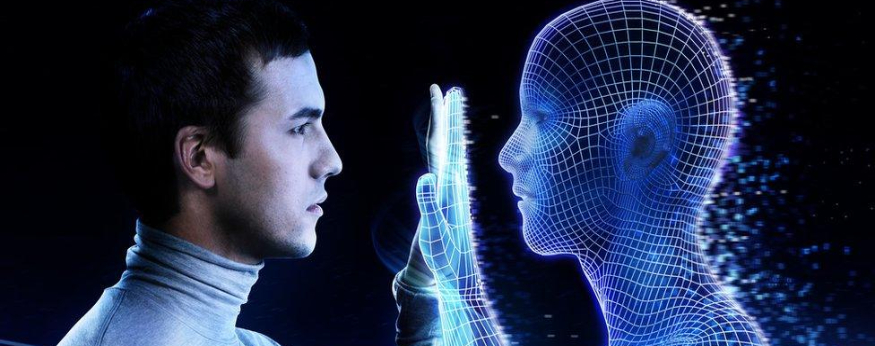

We live in an era where intelligence is frequently viewed as the supreme attribute. From school days to the professional world, the most intelligent are celebrated, promoted, and often considered the best suited to lead, innovate, and solve society’s great problems. Yet this conviction, however understandable, is far from infallible. Intelligence, by itself, is no guarantee of success, virtue, nor even social utility. As my grandfather Lopes used to say upon hearing certain speeches at the pillory of Freixiel: “The guy is smart enough, it’s just a shame he uses it for evil.”
This simple yet profound phrase encapsulates a truth that many ignore: intelligence can be used for good or for bad, and it is not necessarily accompanied by qualities such as ethics, courage, or humility. History is full of examples of brilliant individuals who caused more harm than benefit precisely because they lacked what truly transforms intelligence into value: character.
The belief that the most intelligent are the most qualified to solve problems or create solutions is a dangerous simplification. In reality, success—whether personal, professional, or social—is much more closely associated with other human qualities that are often underestimated. Courage, for example, is essential to face challenges, make difficult decisions, and persist in the face of failure. Without courage, even the most brilliant plans remain merely ideas.
Lucidity is another fundamental quality. Being lucid means seeing the world as it is, without illusions or distortions. It means recognizing one’s own limits, mistakes made, and the consequences of one’s actions. Intelligence can help build sophisticated arguments, but only lucidity allows us to discern what truly matters.
The capacity for sacrifice is also a pillar of true progress. Many of humanity’s greatest achievements were reached by people who dedicated themselves, who gave up comfort, and who worked hard without guarantees of recognition. Intelligence can ease the path, but effort is what travels it.
Modesty, in turn, is the key to continuous learning. Anyone who considers themselves too smart tends to close themselves off to criticism, doubt, and the experiences of others. Modesty allows us to learn from our mistakes, listen to those who know more—or simply differently—and grow with every challenge. It prevents us from falling into arrogance, that poison which turns intelligence into presumption.
Finally, ethics. The ability to self-regulate behavior according to moral principles is perhaps the greatest differentiator between a destructive genius and a constructive sage. Ethics guides intelligence toward noble ends, the common good, justice, and dignity. Without ethics, intelligence becomes a dangerous tool capable of manipulating, exploiting, and harming.
It is curious to note that, in many contexts, true leaders and innovators are not the most intelligent, but the most integral, resilient, and human. People who, even without an extraordinary IQ, manage to mobilize teams, inspire trust, make sound decisions, and create lasting value. These are the people who make a difference—not because they are brilliant, but because they are courageous, lucid, humble, hardworking, and ethical.
Society urgently needs to revise its criteria for valuation. Continuing to idolize intelligence as if it were an absolute gift is to ignore the complexity of human nature. We need to recognize that there are many types of wisdom, and that logical or analytical intelligence is only one of them. Emotional wisdom, social sensitivity, listening skills, empathy, strategic vision—all of that counts, and often counts for more.
This is not about devaluing intelligence, but about putting it in its proper place. It is a powerful tool, yes, but it is only truly useful when guided by solid values and complemented by other virtues. A hammer can build a house or destroy a wall—it all depends on who is holding it and with what intention.
Therefore, the next time we hear someone described as “very smart,” perhaps we should ask: “Yes, but are they courageous? Are they lucid? Are they humble? Are they ethical?” Because, as grandfather Lopes used to say, intelligence without character is like a rider without direction—they might go far, but we never know where.
Paulo Fidalgo
CEO of Marketividade