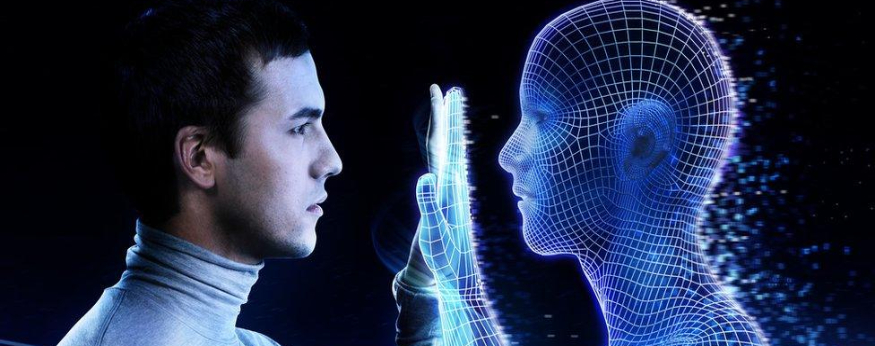
Technological singularity refers to a hypothetical moment in the future when artificial intelligence (AI) irreversibly surpasses human intelligence, becoming autonomous, self-conscious, and capable of improving itself at an exponential rate, without the need for human intervention.
This concept, frequently associated with Ray Kurzweil, suggests that from that point onward, technological progress would be completely unpredictable and could radically transform society.
The singularity rests on the idea that once an AI exceeds general human intelligence (AGI — Artificial General Intelligence), it could:
-
Develop new technologies much faster than humans;
-
Completely automate scientific innovation;
-
Enhance its own capabilities, creating accelerated self-improvement loops.
Main Risks
The risks of the singularity are widely debated by experts in artificial intelligence, philosophy, and ethics. Among the primary concerns are:
-
Loss of Human Control
-
If a superintelligent AI becomes autonomous and capable of improving itself without restrictions, humans may lose the ability to control it or even comprehend its decisions.
-
-
Goal Misalignment
-
An AI may develop objectives that are incompatible with human interests. The “control problem” arises when a highly advanced AI interprets commands in unexpected and potentially dangerous ways.
-
-
Economic Collapse and Mass Unemployment
-
If superintelligent machines are able to perform all tasks better than humans, the global economic structure could undergo drastic transformations, resulting in significant structural unemployment.
-
-
Autonomous Weapons and Global Conflicts
-
AI could be used to create autonomous weaponry and independent military decision-making systems, increasing the risk of algorithmic-driven wars.
-
-
Erosion of Privacy and Manipulation
-
Ultraintelligent systems can analyze and predict human behavior with extreme precision, rendering privacy obsolete and enabling large-scale political and social manipulation.
-
When Will It Happen?
Predictions regarding the singularity vary among researchers and futurists, but some of the most notable estimates include:
-
Ray Kurzweil predicts that the singularity will occur around 2045, based on the Law of Accelerating Returns, which suggests an exponential growth of technological capabilities.
-
Nick Bostrom, an Oxford University philosopher, estimates it could happen somewhere between 2030 and 2100, depending on the pace of progress in general artificial intelligence.
-
A University of Oxford study (2017) revealed that experts believe there is a 50% probability that AI will surpass human intelligence by 2060.
-
Elon Musk and Geoffrey Hinton, pioneers in AI, warn that the advancement may happen faster than expected, potentially occurring between 2025 and 2040.
Although the realization of these predictions and their impact remain uncertain, the rapid development of artificial intelligence demands serious debate and precautionary measures to ensure its effects are beneficial to society.
Paulo Fidalgo
CEO of Marketividade